Types of Vinyl Flooring
FIND YOUR STYLE
Vinyl flooring comes in four main formats, each suited to different rooms, aesthetics, and installation needs. Understanding what sets them apart makes it easier to choose the right one before you start shopping.
Explore our Vinyl Flooring Guide
Vinyl flooring is an excellent choice for any homeowner looking to update their flooring. It's durable, easy to clean, and comes in a variety of styles and colors.
Although vinyl has been around for generations, today's technology has produced luxury vinyl formats with realistic textures and visual depth that closely mimic natural stone and hardwood flooring. Since vinyl flooring performs well in high-moisture and high-traffic areas, these looks are viable throughout the home. Once you have decided vinyl is right for your space, the next step is choosing which format fits best.
Once you've decided that vinyl is right for your home, it's time to explore the different formats to see which is the best fit:
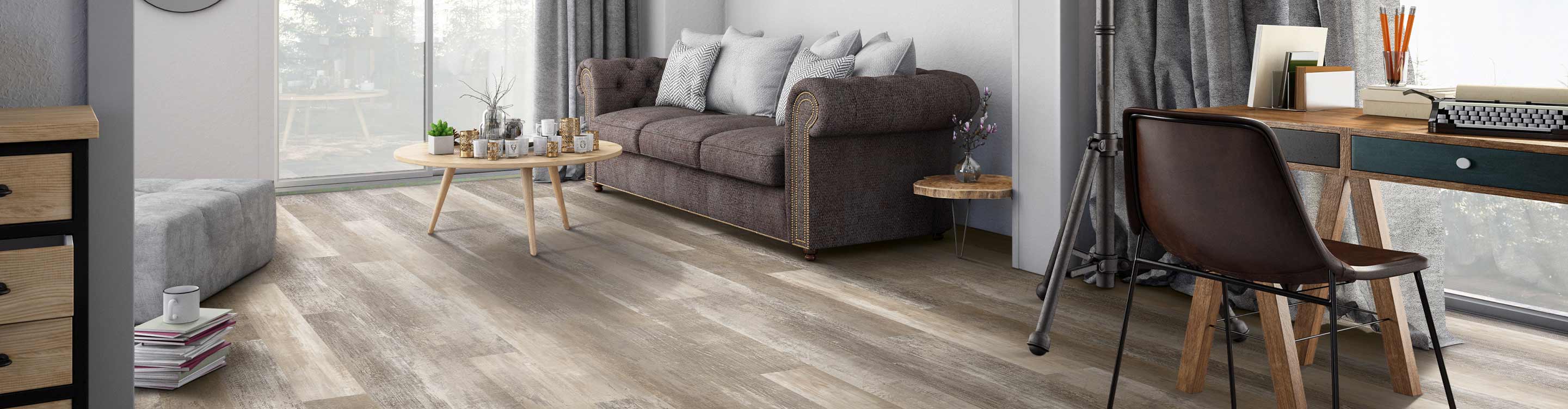
Luxury vinyl plank flooring is designed to replicate the look and feel of hardwood without the maintenance demands that come with real wood. LVP planks are produced in elongated formats that mimic the grain, texture, and color variation of wood species, and the best products use embossed-in-register technology to align the surface texture with the printed grain below it for a realistic result.
Unlike natural wood, LVP is waterproof and holds up in rooms where hardwood is not a practical choice, including kitchens, bathrooms, and basements. It resists stains and is significantly easier to maintain than traditional hardwood. Available in a wide range of species looks, stain colors, and plank widths, LVP gives you the aesthetic flexibility of hardwood with performance suited to busy households.
Luxury vinyl tile is produced in square and rectangular formats designed to replicate the look of stone, ceramic, and porcelain tile. Where natural stone like travertine or marble comes with significant weight and cold, hard surfaces underfoot, LVT delivers comparable visual depth while being warmer, softer, and considerably more forgiving to stand on for long periods. It performs well in kitchens, bathrooms, laundry rooms, and any space where a tile aesthetic fits.
LVT is available in a wide range of formats, from large-format rectangular tiles that suit contemporary open-plan spaces to smaller mosaic-style options for more intricate layouts. Because individual tiles are installed separately, replacing a damaged tile is straightforward without disturbing the rest of the floor.
For a side-by-side breakdown of how LVT compares to LVP, see our LVT vs LVP comparison.
Sheet vinyl is manufactured in continuous rolls, typically 6 to 12 feet wide, which means an entire room can often be covered with a single piece and few or no seams. That near-seamless installation makes sheet vinyl one of the most practical choices for bathrooms, kitchens, and laundry rooms, where limiting the number of seams reduces the places moisture can work its way through.
Modern sheet vinyl has come a long way from the utilitarian product it once was. Improved printing technology means today's sheet vinyl can credibly replicate the look of stone, ceramic tile, or hardwood. It installs over a wide range of subfloor types including concrete, tile, wood, and existing vinyl, and the inlaid construction option offers added thickness and durability for spaces that see heavy use.
No matter what format or style of vinyl you choose, you need a sturdy wear layer if your floor is going into high-traffic areas. The wear layer is the urethane-based top coat and finish of vinyl flooring that provides defense against scuffs, dents, scrapes, and stains. The thicker the wear layer, the more durability your vinyl floor will provide over time.
Among the different types of wear layer, vinyl no wax is the entry-level surface that offers some resistance to scuffs and stains. Urethane is more durable and low maintenance compared to vinyl no wax and has more resistance to black heel marks and most household chemicals.
The large selection of designs, formats, and colors of vinyl flooring makes it easy to find a style you love.
Vinyl flooring is available in a broader range of visual styles than almost any other flooring category. Whether you are working with a contemporary, traditional, coastal, or industrial aesthetic, there is a vinyl format and colorway that fits. Plank widths, grout line options, surface textures, and finish sheens all give you meaningful control over the final look, and many products are available in coordinating formats so the same visual carries through different room types.
Vinyl flooring installs over a wider range of subfloor types and conditions than most other flooring categories, including below grade, which makes it a practical option for basements and other spaces where some flooring types cannot be used. That installation flexibility is one of its consistent advantages across all four formats.
Professional installation is the right approach for most vinyl flooring projects. A properly installed vinyl floor looks better, performs better, and lasts longer than one that was rushed or improperly fitted. Our installers have the training and tools to handle subfloor prep, seam placement, and transitions correctly, giving your floor the foundation it needs to perform well for years.
Choosing the right vinyl format depends on the room and the aesthetic you are going for. Whether you want the look of hardwood or stone, there is a vinyl option that will meet your needs.
Your perfect floor is closer than you think. As your trusted flooring partner, we're here to help you find a look you'll love for years to come, with guidance on styles, installation, and care every step of the way. When you're ready, don't wait to reach out and let one of our flooring experts guide you toward the perfect fit for your space.
The three main types of vinyl flooring are luxury vinyl plank (LVP), luxury vinyl tile (LVT), and sheet vinyl. Some sources count vinyl tile as a fourth type, though it is sometimes grouped under the broader LVT category because both formats use individual pieces rather than a continuous roll.
LVP is produced in elongated plank shapes that mimic the look of hardwood and works well in living rooms, bedrooms, and open-plan spaces. LVT is produced in square or rectangular shapes that mimic stone, ceramic, or porcelain and is well suited to kitchens, bathrooms, and laundry rooms. Sheet vinyl comes in large rolls, typically 6 to 12 feet wide, and limits seam exposure, making it one of the strongest choices for high-moisture areas. All three formats are available in waterproof or water-resistant constructions and a wide range of styles.
LVP and LVT are both luxury vinyl products built on the same core construction, but they are shaped differently and suited to different aesthetics. LVP (luxury vinyl plank) comes in elongated plank shapes designed to mimic hardwood flooring. It is the go-to choice for living rooms, bedrooms, hallways, and open-plan spaces where a wood-look floor is the goal.
LVT (luxury vinyl tile) comes in square or rectangular shapes designed to mimic stone, ceramic, or porcelain tile. It delivers the look of travertine, marble, or slate and performs well in kitchens, bathrooms, and laundry rooms where a tile aesthetic fits the space.
Both are durable, water-resistant or waterproof depending on construction, and easy to maintain. The choice comes down to the look you want: wood or tile.
Thank you for contacting Carpet One Floor & Home. Your local flooring expert will reach out to you regarding your inquiry.